Rika Balletto
Man on FireRika Balletto is Pinta Balletto’s mother and Ettore Balletto’s wife, and her story moves from the privilege and enclosure of beauty to the shock of discovering her husband’s betrayal. She insists that Pinta have a bodyguard, witnesses an armed killing in Milan, and ultimately learns that Ettore helped arrange the kidnapping that cost their daughter her life. In the final confrontation, she asks Creasy to leave Ettore to her: the request marks a decisive change from the woman whose beauty has long served as armor to one who faces the truth of her marriage without that protection.
Identity, Appearance, and Marriage
Rika is introduced looking through French windows across the lake toward the lights of the Hotel Villa D’Este. Her appearance is described in deliberate detail: heavy ebony hair, high cheekbones, slanted eyes, a cleft chin, and a slim, long-legged figure. She wears a straight blue-patterned knitted-silk dress, simple in cut but rich in texture. The description establishes beauty not merely as a quality others notice, but as a force shaping how she moves through life.
The narration says that Rika’s beauty has allowed her to follow paths unavailable to most women, serving as both a weapon and an armored vehicle against discomfort and indignity. It also marks the cost of that protection. She has a good mind, the narrator observes, but the life made possible by her beauty has restricted what she can see beyond its immediate circle of advantage. The image is double-edged: beauty grants access and shelter, yet also limits her view of the world beyond them.
Ettore’s account of their thirteen-year marriage supplies another perspective on Rika. Driving back from Milan after a week away, he misses her and Pinta but anticipates a difficult homecoming because decisions must be made and he expects Rika to dislike them. He thinks of himself as unable to leave her, comparing marriage to an addiction from which there can be no cold-turkey withdrawal or substitute treatment. He describes her to himself as beautiful, willful, and self-centered, and believes she will not change. This is Ettore’s characterization, not a neutral verdict: his language emphasizes his own dependence even as it casts Rika as the fixed force in their relationship.
A Mother’s Demand for Protection
Rika’s insistence on protection for Pinta is the clearest early instance of her using her authority within the family. She declares that she will not allow her daughter to return to school in Milan unless she has protection. When Ettore asks what she means, she answers that Pinta needs a bodyguard. The demand converts maternal anxiety into a concrete condition, and it leads to Creasy’s hiring as Pinta’s protector.
After reading the agency report on Creasy, Rika tells Ettore that he frightens her, then adds that she thinks it is nice he is American and that he is different. Her response holds unease and interest together: she does not dismiss the threat she senses in him, but recognizes his difference as appealing. The report and Creasy’s foreignness register through her reaction before their relationship has developed into trust.
Witness to Violence in Milan
Rika’s encounter with political violence comes while she is returning from a hairdresser’s on an overcast day in heavy Milan traffic. She sees two men leap from the side door of a Volkswagen van and run toward a man unlocking a white Fiat. When the men raise their guns and fire, Rika stops, stunned. Creasy reaches her, sweeps her into a shop doorway, and covers her as shots break glass overhead.
The episode is conveyed through what Rika sees and hears: the attackers, the shots, the shattered glass, and Creasy’s gun held low at his side. After the van speeds away, she sees blood on the Fiat and understands instinctively that the man is dead. Creasy calmly tells her to stay where she is, then helps her up and walks her to the car as people begin moving again, a woman sobs, and a siren approaches. Rika is not presented as an armed participant in the killing; she is its witness and a person Creasy shields from the immediate danger. The scene gives her a direct encounter with violence that makes his protective role tangible beyond the question of Pinta’s security.
The Kidnapping Fraud Revealed
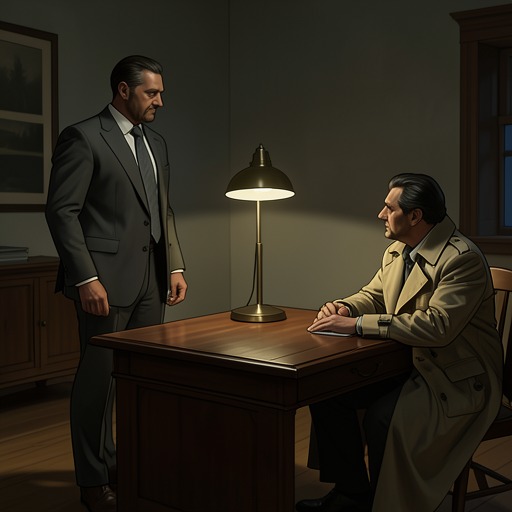
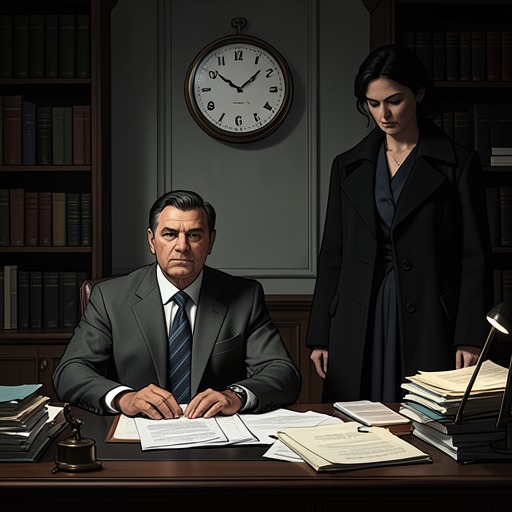
At the later dinner by the lake, Rika and Ettore sit across from one another at a polished table. She has grown thinner but retained her beauty; he appears unchanged. The narrative contrasts those appearances with what each has lost or kept: Rika has lost something precious, while Ettore still possesses what matters most. When the door opens, they expect Maria with dessert. Instead, Creasy fills the doorway, and the couple stare at him before Ettore asks what he wants.
Creasy tells Rika what he has learned from Fossella: Pinta’s kidnapping was an insurance setup. Ettore had taken out a policy with Lloyd’s of London for two billion lire, and the arrangement called for Fossella to return half the ransom to him. Vico Mansutti served as the intermediary, using his organized-crime connections for a commission. Rika listens without taking her eyes off Creasy. Only after the explanation does she turn toward her husband, and the hatred that passes across the table is described as almost physical.
Ettore slumps in his chair, opens his mouth without speaking, and lets his eyes slide away. Rika’s discovery recasts the marriage she had inhabited: the husband who had comforted her after Pinta’s loss, telling her they still had each other and that life went on, had helped engineer the crime. Her memory of that consolation surfaces in the room, but it cannot survive intact beside the revealed bargain. The betrayal is not simply that Ettore concealed a financial scheme; it is that he made their daughter’s kidnapping part of it.
Final Choice and Narrative Significance
Rika asks whether Creasy killed the other people involved, then returns to the question of whether he killed all of them. When Creasy picks up his pistol and says he came to kill Ettore, she tells him to leave her husband to her. The brief answer is forceful because it changes the terms of the scene: Creasy arrived prepared to kill Ettore, but Rika claims the right to decide what happens next. She does not explain what she intends to do, and the narrative does not establish her eventual action. Her demand is the ending of her immediate arc, not evidence of a completed revenge.
She stops Creasy as he moves toward the door to ask about Mansutti. Even in the moment when Ettore’s guilt has become undeniable, her attention extends to the intermediary in the scheme. The question leaves the wider network of responsibility open rather than reducing the revelation to a private marital confrontation.
Rika’s development is shaped by recurring reversals in what appearance and protection can mean. Beauty once functioned as a shield, while her insistence on a bodyguard sought to protect Pinta from danger. Creasy physically shields Rika during the shooting; later, he brings her knowledge that strips away the comforting story Ettore had offered. At the table, she faces both the truth and the husband who concealed it, then refuses to let Creasy determine her response. Her final words give her a voice in a plot where her beauty has often defined how others see her and her daughter’s fate has been decided by other people’s actions.